Apple Valley Just Killed a 1-Million-Sq-Ft Data Center.
TLDR
Oppidan proposed a 1-million-square-foot data center campus on 135 acres at Orchard Place in Apple Valley
After 15 months of hearings, extensions, and a foundational land use denial, the planning commission unanimously recommended denial of all remaining applications on March 18, 2026
The dealbreaker: a required comprehensive plan amendment was denied by the city council in January 2026
Oppidan pulled its rezoning application on March 6, making the other approvals legally moot
City Council takes a final vote March 26 — no public hearing
Apple Valley just said no to one of the biggest proposed developments in the south metro in years. Here's how a 1-million-square-foot data center project went from a promising land use application to a unanimous denial — and why it matters for what happens next at Orchard Place.
What Was Proposed
In late 2024, Oppidan Investment Company — filed a land use application with Apple Valley for what they called the Apple Valley Technology Park. The site: a 135-acre chunk of the former Fischer Aggregate sand-and-gravel mining operation at Orchard Place, owned by Rockport LLC.
The plan called for seven buildings total — five large data centers plus a couple of smaller support structures — with a total footprint of roughly 1,050,000 square feet. The buildings would have ranged from about 28 feet tall to nearly 85 feet for the biggest two-story structures. It would have been developed in phases over several years.
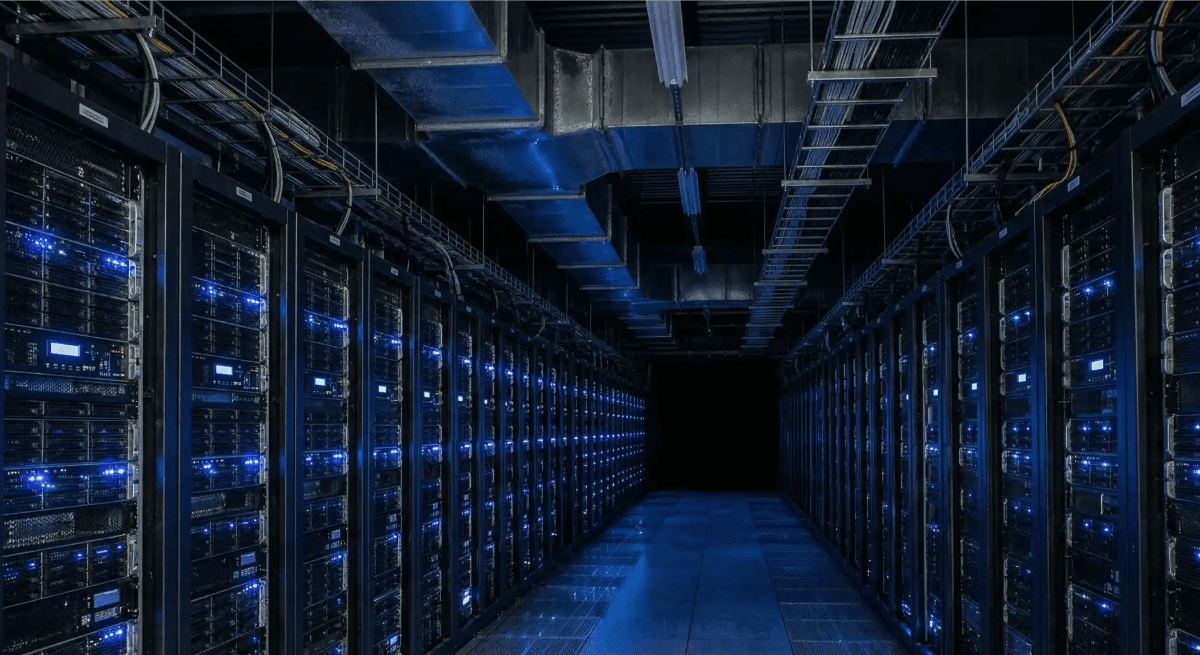
Oppidan pitched it as a cloud computing and corporate data center facility — not a massive AI training farm like the Meta hyperscale project being built in Rosemount. Still, by any measure, it was a massive project for Apple Valley.
At the February 2025 public hearing, Oppidan's representatives said the campus would add roughly $1.08 billion to Dakota County's GDP over the construction period, generate $869 million in labor income, and create about 200 permanent full-time jobs — along with around 12,000 job-years of construction work through 2028.
Why It Couldn't Work: The Zoning Problem
Here's the issue: the Orchard Place land is currently zoned Sand and Gravel (SG) — because that's literally what it's been used for. Data centers aren't allowed there. To get a data center built, you'd need to rezone the land to a new category called Mixed Use Business Campus (MUBC).
But the rezoning couldn't happen without first changing Apple Valley's comprehensive guide plan — basically the city's official long-term blueprint for how land gets used. Rockport LLC applied for that comprehensive plan amendment (CPA) separately.
The planning commission held an initial hearing on the CPA in January 2025 and tabled it. In April 2025, they came back and recommended denial by a 5–1 vote. Their reasoning: the proposed land use change was incompatible with Apple Valley's 2024 Comprehensive Plan vision for the area, and the city raised serious concerns about water supply — data centers require enormous amounts of water to cool their servers 24/7, and Apple Valley wasn't confident it could deliver.
Rockport disputed the city's water analysis and pushed for extensions — nearly nine months of back-and-forth letters and meetings with city staff. Eventually, on January 22, 2026, the Apple Valley City Council unanimously adopted Resolution 2026-11 denying the comprehensive plan amendment. That was the kill shot.
The Rezoning Withdrawal and the Final Hearings
With the CPA dead, the rezoning had no legal path forward. On March 6, 2026, Oppidan formally withdrew its rezoning application. Rockport LLC followed with a letter withdrawing its consent to the rezoning entirely.
That left three applications technically still pending: the conditional use permit (CUP) for the data center use, the preliminary plat subdividing the 135-acre site into lots, and the site plan and building permit authorization.
Without the rezoning, none of those three could legally be approved. But the planning commission still had to go through the formal process of closing the public hearings and making official recommendations. So on March 18, they did exactly that — opening (and in one case, reconvening) the public hearings, and then voting unanimously to recommend denial on all three applications.
The vote was quick, the room was quiet. No residents came forward to speak. Even the applicant's representative, Pete Carow, took a gracious tone — thanking city staff for their work, noting that Oppidan values its relationships in the south metro, and mentioning the company is actively building another data center in Eagan right now.
"We do believe that this data center is an appropriate use for this site," Carow said. "We do anticipate a denial tonight, but we found it important to address the commission."
What the Water Issue Really Means
It's worth pausing on the water question, because it came up repeatedly throughout this process and is likely to come up again as data centers proliferate across the south metro.
Data centers run hot — servers generate enormous heat, and cooling systems run constantly, 24/7, 365 days a year. A campus the size of what Oppidan proposed would have needed a significant, reliable water supply to keep things running. Apple Valley's city staff concluded they simply couldn't guarantee that supply.
Rockport tried to work around it late in 2025 by proposing private on-site water wells, citing informal support from the Minnesota DNR. But the city said it would need to commission its own study to assess impacts on municipal wells and nearby surface water — and wanted Rockport to put money in escrow to fund that study. The impasse never resolved. You can read more about Minnesota's broader data center regulatory challenges — including issues with backup power permits — in this Star Tribune report.
What Happens Next
City Council votes on the denial resolutions at its regular meeting on Thursday, March 26, 2026. There's no public hearing scheduled at that meeting.
The 135-acre Rockport site at Orchard Place is still there, still zoned sand and gravel, still waiting for a vision that works. There's been no public announcement from Rockport on what comes next — whether that's a revised development proposal, a different land use application, or something else entirely.
For context on what Apple Valley has been planning for development in this part of the city, check out our 2025 Apple Valley development recap.
FAQ
Who were the companies involved?
Oppidan Investment Company (Excelsior, MN) filed the land use application and proposed the data center. Rockport LLC — whose principals are behind Fischer Aggregate and Apple Valley Redi-Mix — owns the 135 acres and was the cosigner on the application.
What exactly was the comprehensive plan amendment, and why did it matter?
Apple Valley has an official long-range land use map — basically a blueprint for how different areas of the city are supposed to develop over time. Rockport wanted to change the designation on its land to allow a mixed-use business campus. Without that change, data centers couldn't be permitted there, period. The planning commission and city council both said no.
Was water really the main reason it was denied?
It was one of two big reasons. The city also said the proposed land use change was inconsistent with the 2024 Comprehensive Plan's vision for Orchard Place — which called for a mix of office, medical, retail, and residential, not a massive industrial data center campus. Water supply was a major technical concern on top of that.
Could Oppidan try again with a smaller project?
Possibly — but it would require starting the land use amendment process over from scratch, and it's unclear whether Rockport or Oppidan plans to do that. Oppidan said publicly it believes the site is appropriate for a data center; whether they pursue that belief is an open question.
When does this officially become final?
The Apple Valley City Council votes on the denial resolutions at its regular meeting on Thursday, March 26, 2026. No public hearing is scheduled at that meeting — the planning commission hearings served as the public comment period.