District 196 Is Expanding Dakota Language Education
District 196's American Indian Education Program just gave a detailed update to the school board, and there's a lot happening that families should know about.
The big news: Dakota language clubs have expanded from five elementary schools to all 20 across the district. And a high school Dakota language course — offered as a world language elective for credit — is currently being developed.
579 Students. 67 Tribal Nations.The district's American Indian Education Program serves roughly 579 students from pre-K through 12th grade, and those students represent 67 different tribal nations. The largest groups are Ojibwe (46%) and Dakota (24%).
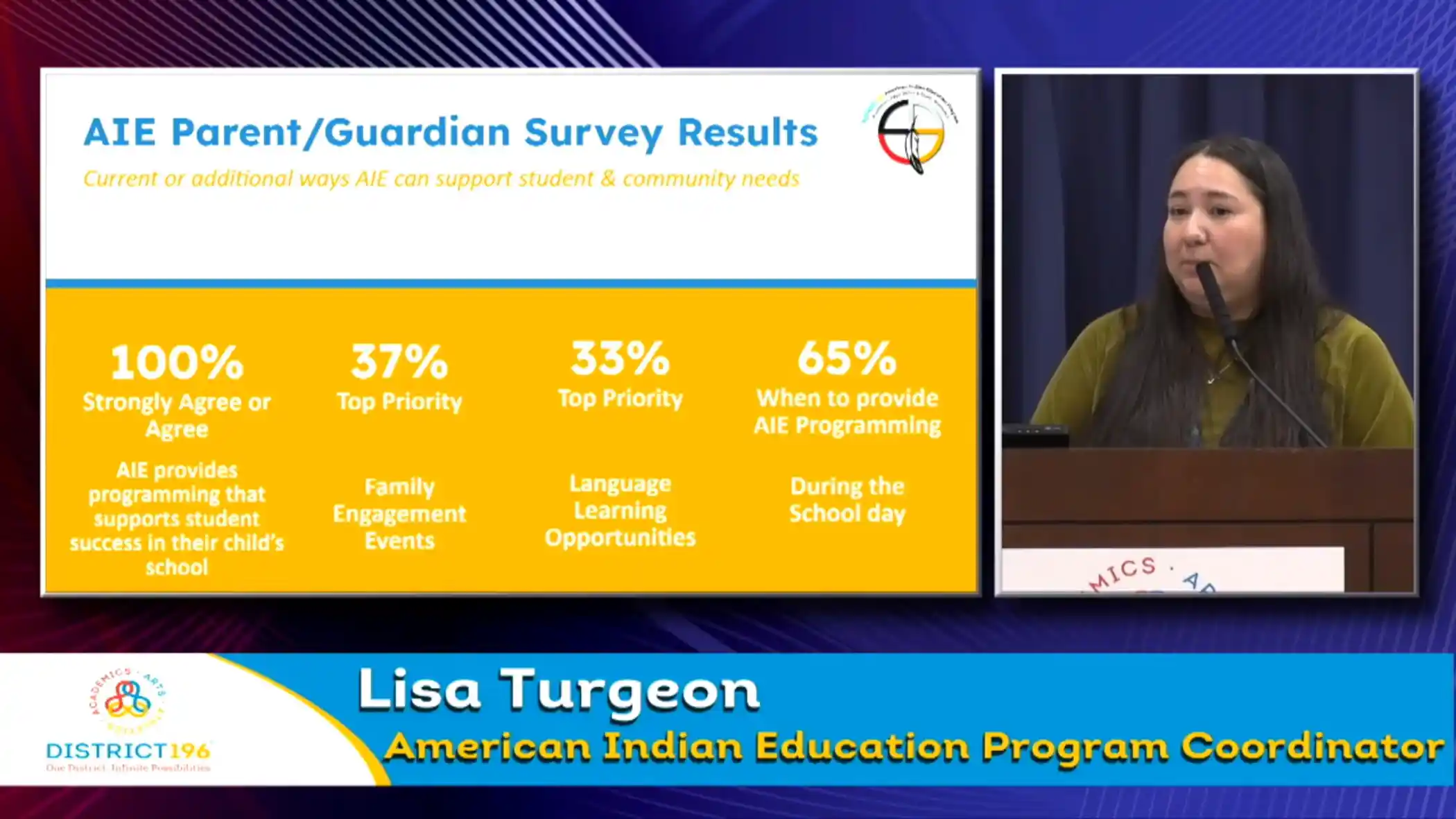
Five cultural family advocates are now embedded in school buildings across the district, providing academic, cultural, and social-emotional support. Program Coordinator Lisa Turjan told the board that having staff consistently at every school site, every week, has been a top priority — and parents have noticed. According to the program's annual survey, 100% of responding families said the program supports their child's success.
That kind of number is hard to ignore.
What This Looks Like Day to Day
This goes way beyond language clubs. Here's what the program is doing across grade levels:
Pre-K: The program partners with Early Childhood Family Education to run a six-evening series that blends Minnesota's early learning math standards with Dakota and Ojibwe ways of knowing mathematics. Think: learning to count and sort, but through a cultural lens.
Elementary: Monthly book clubs featuring Native-authored texts, Dakota language clubs at all 20 elementary schools, family engagement nights, and drum and dance classes to prepare for the annual South of the River Powwow.
Middle School: Leadership groups, after-school homework help, and cultural learning. This week, students were spreading awareness about the Missing and Murdered Indigenous Women and Relatives campaign ahead of February 14th. The program also took middle schoolers to the American Indian Science and Engineering Society national conference in Minneapolis this year.
High School: ACT prep, college campus tours (St. Olaf was on the schedule this week), FAFSA nights, scholarship help, and field trips like a recent visit to the Dyani White Hawk exhibit at the Walker Art Center. If you haven't seen it — it's incredible. Highly recommended.
The NAPAC Recommendations
The Native American Parent Advisory Council brought four recommendations to the board, and all were unanimously approved:
- Strengthen American Indian curriculum across all grade levels and subjects
- Conduct a district-wide inventory of authentic Native-authored books in classrooms and media centers
- Continue training teachers in culturally responsive instruction around Dakota and Ojibwe culture
- Run a needs assessment at Title I schools to identify barriers impacting Native student achievement
NAPAC Chair Nicole Lonree Brovald put it simply: some of these asks — like the Dakota language course — started three years ago and are just now coming together. "As long as the progress keeps going in the right direction, that's what we're asking for."
That Dakota language push lines up with a broader statewide movement. The Minnesota Department of Education now requires districts to offer Dakota and Anishinaabe language instruction, and the University of Minnesota's Dakota Language Program has been working for years to create new fluent speakers — noting there are currently fewer than 25 first-language Dakota speakers from Minnesota communities.
South of the River Powwow — May 2nd
Mark your calendars: the annual South of the River Powwow is happening May 2nd at Burnsville High School. It's a collaboration between Indian education programs from District 196, Farmington, Lakeville, Burnsville, Shakopee, and others.
Powwows are open to everyone and feature dance, music, regalia, storytelling, and language. If you've never been to one, this is a great first experience.
Why This Matters for the South Metro
If you've been following how District 196 made personal finance mandatory or the policy updates happening in Lakeville Schools, this is another example of how curriculum decisions get made at the local level — and how parent advisory groups can actually move the needle over time.
With 579 students, 67 tribal nations represented, and a parent council that's clearly engaged and pushing for measurable progress, this is a program worth paying attention to. Especially as the district navigates its 12.8% tax levy increase and families want to know where their money is going.
Advertisement