Lakeville's Middle Schools Could Hit 111% Capacity by 2028 — Here's Why the District Says It Can't Wait
TLDR
- Century Middle School is already at 94% capacity — well past the 85% "full" threshold.
- Without action, middle school capacity could hit 111% by 2028-29.
- 8% enrollment growth is projected over the next five years — about 250 more students.
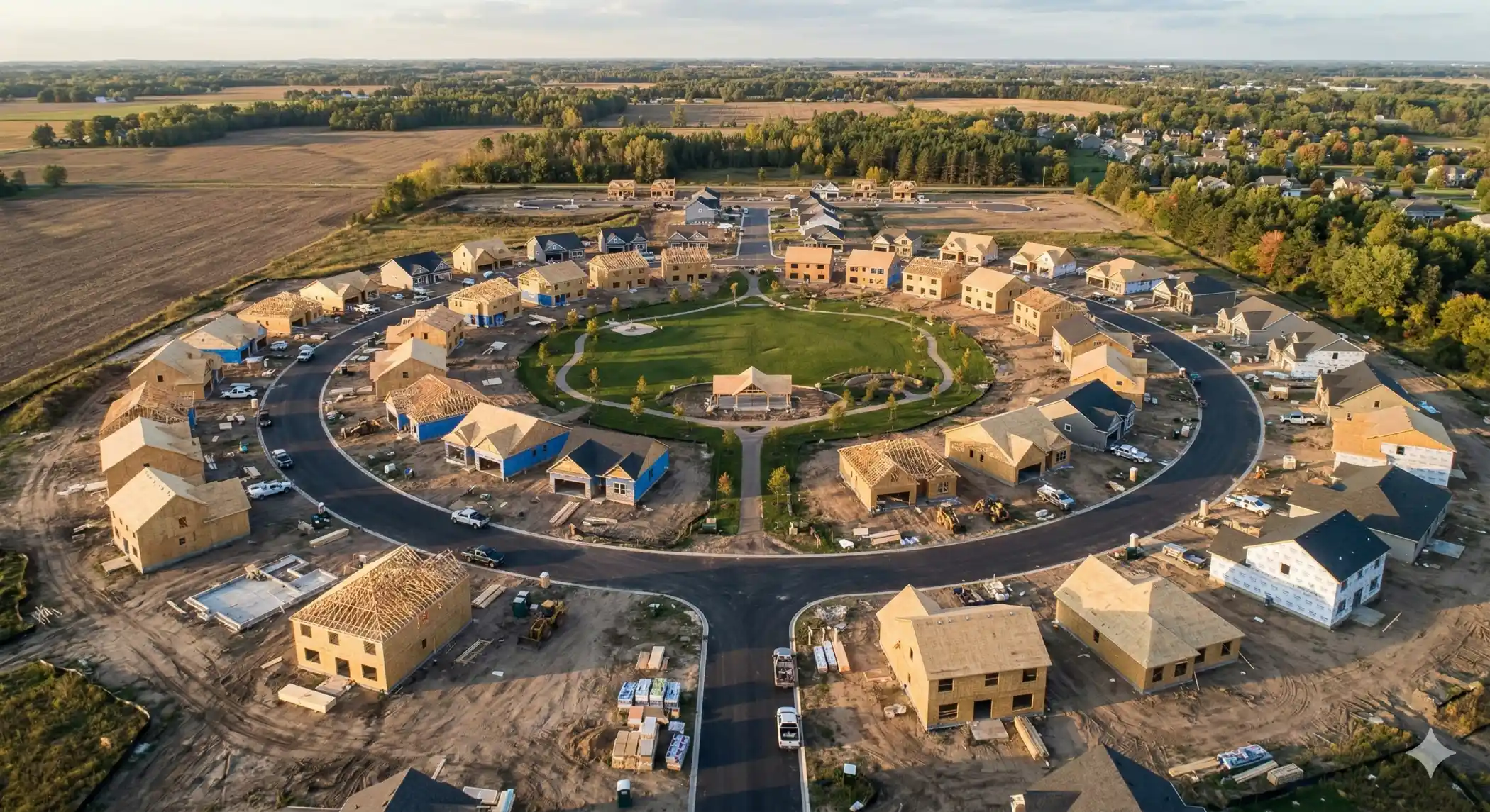
- Nearly 9,000 new homes have been built in the Lakeville area in the past decade.
If you've driven around Lakeville lately, you've probably noticed the construction. New neighborhoods popping up. Townhomes going in. Apartment buildings rising.
What you might not realize is what all that growth means for the schools your kids go to — or will go to.
At a community meeting on Feb. 24, Superintendent Michael Baumann laid out the enrollment numbers that are driving Lakeville Area Schools' push for a $139.6 million bond referendum on May 12. And the numbers are pretty stark.
Century Is Already Over Capacity
The district uses 85% as the benchmark for a "full" building. That's because the remaining 15% isn't empty space you can just throw desks into — it's where special education programs run, where staff need room to work, and where all the behind-the-scenes stuff happens that makes a school function.
Century Middle School is at 94% right now. That's 9 percentage points past full. Baumann didn't mince words about it — he said it "makes things very, very difficult."
Kenwood Trail and McGuire aren't far behind. All three middle schools are already feeling the squeeze.
The Projections Get Worse
The district is projecting 8% enrollment growth at the middle school level over the next five years. That translates to roughly 250 additional students — the equivalent of eight new classrooms.
If nothing changes, Baumann showed projections that middle school capacity would hit 111% by the 2028-29 school year. That's not "a little crowded." That's hallways packed shoulder-to-shoulder, cafeterias that can't seat everyone, and scheduling nightmares for principals trying to fit classes into rooms that don't exist.
Where's the Growth Coming From?
Lakeville was recently named the fastest-growing suburb in Minnesota. Nearly 9,000 new homes, townhomes, and apartments have been built across the Lakeville area over the past decade. That wave of housing brought more than 1,200 new students into the district.
And it's not slowing down. Lakeville, Elko New Market, and Credit River are all projected to keep growing through at least 2040. Baumann pointed out that when cities approve new housing permits, the schools that have to absorb those kids aren't always part of the conversation.
He specifically mentioned a residential development on the southwest side of Lakeville — a Traditions project — that's putting in sewer lines ahead of schedule. That means families could be moving in sooner than the district originally planned for.
The Elementary Playbook Worked
This isn't the first time Lakeville has dealt with a growth crunch. Starting in 2018, the district added space at the elementary level — including building Highview Elementary — with community-supported bonds. That strategy worked.
Now those elementary kids are moving up into middle school. The wave that hit elementary schools a few years ago is hitting middle schools right now. And the same approach — targeted additions rather than building from scratch — is what the district is proposing again.
The district also recently completed boundary adjustments to help balance enrollment across schools, but that alone isn't enough to solve the space problem.
It's Not Just About Desks
Overcrowding doesn't just mean bigger class sizes. It means cafeterias that can't feed everyone efficiently. Gyms that are scheduled wall-to-wall. Specialist spaces — STEM labs, band rooms, art studios — that are stretched thin or doubling up. Special education programs squeezed into whatever space is left.
Baumann stressed that Lakeville's strong reputation for education quality — 90% of surveyed residents rate the schools as excellent or good — depends on having the physical space to deliver that education.
The Bottom Line
The district says the students are already in the pipeline. The fourth graders heading to middle school will push total middle school enrollment past 3,000. The question for voters isn't whether the growth is coming — it's whether the buildings will be ready for it.
The $139.6 million bond vote is on May 12. Early voting starts March 27.
FAQ
How full is Century Middle School right now?
It's at 94% capacity. The district considers 85% to be "full" because you still need room for special ed, staff workspace, and other programs. So Century is already 9 points past that mark.
How many more students are expected?
About 250 more middle schoolers over the next five years — an 8% increase. That's like adding eight full classrooms of kids.
What happens if nothing is done?
Projections show middle school capacity hitting 111% by 2028-29. That means serious overcrowding, bigger class sizes, fewer course options, and strained resources.
Didn't they just do boundary changes?
Yes. The district recently adjusted attendance boundaries to balance enrollment. It helps, but it doesn't create new space — it just redistributes who goes where.
Is the growth going to keep going?
All signs point to yes. Lakeville, Elko New Market, and Credit River are all projected to grow through at least 2040. New housing developments are still being built across the area.
Advertisement