There's a Forgotten Cemetery Right Across the Road from Carpenter Nature Center
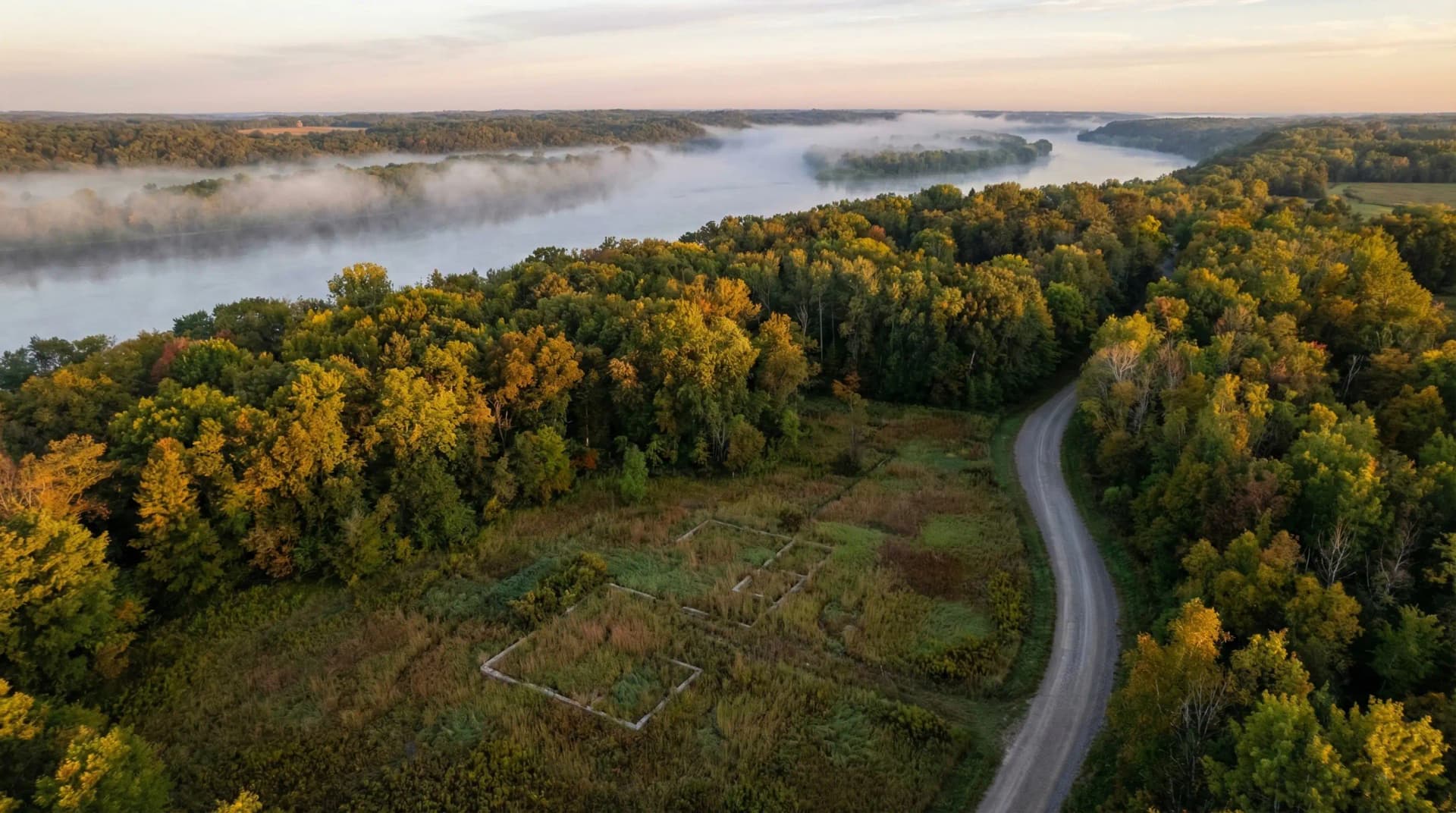
Most people who visit Carpenter Nature Center in Washington County have no idea there's a historic cemetery just across the road. It's tucked behind a quarter mile of prairie, hidden from view, and for about 100 years it was basically abandoned.
The Point Douglas Cemetery is one of the oldest burial sites in the region. And the story of how it was found, cleaned up, and preserved is worth knowing.
We heard about it recently from Mayme Johnson, who worked at Carpenter Nature Center from 1987 through 2025. She grew up knowing this land and spent part of a recent 45th anniversary presentation on YouTube walking through how the cemetery was lost — and how it came back.
How the Cemetery Got Abandoned
Mary and David Hone were some of the first settlers in the Point Douglas area. According to a historical profile from Hometown Source, David Hone was one of 13 men who came to Washington County in the late 1830s to establish a lumber company — and went on to become one of the founders of both Marine on St. Croix and Point Douglas. In 1861, Mary and David donated three acres of their land for a community cemetery. Just three years later, Mary Hone passed away — and she's buried there.
For years, the road ran right past the cemetery. But somewhere between 1867 and 1874 — Mayme noted she always wondered exactly when — the road was rerouted about a quarter mile to the east. That's the road you drive on today. And when the road moved, the cemetery got left behind.
Decades passed. Trees and shrubs moved in. Sumac took over. Some gravestones got buried under the soil. Others toppled and broke apart. By the time photos were taken in the early 1980s, you could barely tell there were graves at all — just a single tall stone cross visible above the overgrowth.
How It Got Rediscovered
In 1987, Carpenter Nature Center was working on a prairie restoration project. They wanted to know what native grasses and plants used to grow in the area, so they looked at the cemetery — it had never been plowed, which meant native plants were still there. That's how researchers found a rare cream gentian growing among the forgotten gravestones.
From there, the restoration began. Mayme said a volunteer named Jay Hagerness spent years on the project — digging out buried stones, piecing together broken ones, tracking down every family that had been interred there. His mother-in-law spent years writing letters and working through census records, birth records, and death records to document every person buried at the site.
The work they did is remarkable. The cemetery is maintained today, and a metal sign — installed in 2007 with support from the Washington County Historical Society — marks the entrance. There's also a small plaque noting that David Hone deeded the three acres for the cemetery.
Some of the People Buried There
The stories of the people in this cemetery are a real window into early Minnesota life.
Calvin Henry was the first burial, in 1855. The last was Peter Olsen in 1932 — a Swedish farmer whose grandson Rod Olsen maintained the cemetery for many years before he passed away. When Mayme told his story in her talk, you could hear genuine gratitude for the people who kept this place from being completely forgotten.
Willie Vanenwagon was only two years old. George Campbell, whose tall cross is the most visible stone, served in the Minnesota territorial legislature and the first state legislature.
And then there's Annie McDonald. She and her husband took the ferry across to Hastings one day. On the way back, ice along the shore caught the ferry. Both of them went overboard. Her body was found downstream a few days later and buried in the nearest cemetery — Point Douglas. They never found her husband. Her grave marker is a stone pulled from a field with an "A" and an "M" carved into it, because her children couldn't afford anything else.
If you want to dig deeper into the local history of this corner of the South Metro, the Hastings coverage on South Metro Scoop has more on what's happening in the area today — including the 375-home development moving forward in Hastings that's bringing a lot of change to land just a few miles from where these early settlers first put down roots.
The Bottom Line
The Point Douglas Cemetery is across County Road 21 from Carpenter Nature Center's entrance — past the prairie, about a quarter mile in. It's open to visitors and worth a look if you want a quiet, unexpected piece of local history. The stories of the people buried there are exactly the kind of thing that makes this corner of Washington and Dakota County so interesting to dig into.
And if you're planning a fall trip to the area, our South Metro fall adventure guide has plenty of other spots worth adding to the list.
Advertisement